The State of America’s Boys: An Urgent Case for a More Connected Boyhood
The State of America’s Boys: An Urgent Case for a More Connected Boyhood presents research and expert perspectives and investigates what it is about boyhood that too
“If He Can See It, Will He Be It? Representations of Masculinity in Boys’ Television” was developed through a collaboration among Equimundo, the Geena Davis Institute on
Caring Under COVID-19: How the Pandemic Is – and Is Not – Changing Unpaid Care and Domestic Work Responsibilities in the United States, a new report by
Staying-at-Home with our Sons: Fostering Healthy Masculinity in Challenging Times, a new report by Equimundo and the Kering Foundation, summarizes the findings from a national survey of
Today, Equimundo and Axe are launching a landmark analysis of what it means to be a young man in the United States, United Kingdom, and Mexico. On
Provider, guardian, hero – cultural changes have been loosening these narrow roles for men, right? Maybe not as much as we think. New research on attitudes in
The following program overview provides a description of the Manhood 2.0 program, challenges and lessons learned, and key evaluation findings. It is intended to be a summary
On January 21, the day after the inauguration of Donald Trump as President of the United States, more than two million women marched in the United States
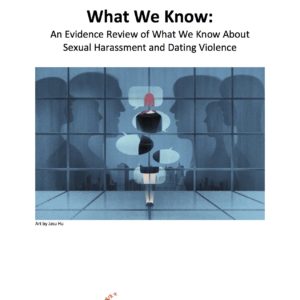
This study released by UC San Diego’s Center for Gender Equity and Health (GEH) and the nonprofit organization Stop Street Harassment (SSH), with inputs from Equimundo and
The Cost of the Man Box: A study on the economic impacts of harmful masculine stereotypes in the United States, a new report from Equimundo and AXE, Unilever’s
The Cost of the Man Box: A study on the economic impacts of harmful masculine stereotypes in the US, UK, and Mexico, a new summary report from Equimundo
The Cost of the Man Box: A study on the economic impacts of harmful masculine stereotypes in Mexico, a new report from Equimundo and AXE, Unilever’s leading male
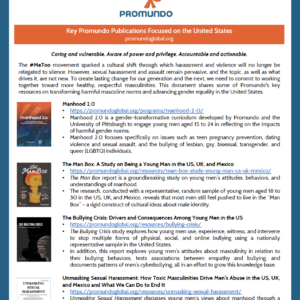
The #MeToo movement sparked a cultural shift through which harassment and violence will no longer be relegated to silence. However, sexual harassment and assault remain pervasive, and the topic,
This research brief presents nationally representative survey data and focus group discussions in the United States on male allyship for gender equality. Results from the study provide
Recently, a Facebook post went viral, comparing a Boys’ Life magazine cover to a Girls’ Life cover side by side. On the left, Girls’ Life features a young girl in full makeup surrounded by headlines like, “Wake up pretty!” while on the right, Boys’ Life leads with, “Explore your Future,” and an illustrative collage featuring a laptop, beaker, microphone, and more.
“Adapting a Global Gender-Transformative Violence Prevention Program for the U.S. Community-Based Setting for Work with Young Men,” is a Equimundo-authored article published in the Global Social Welfare journal. The
As in many regions of the world, violence against women and girls (VAWG) is a serious health and human rights issue in the Latin America and the
You may be familiar with the Axe brand, but what you may not know is that Axe is now on a mission to fight the limitations of
Equimundo and the University of Pittsburgh are pleased to announce the launch of Manhood 2.0, a gender-transformative curriculum and community-based program for adolescent boys and young men
The #MeToo and #TimesUp movements have called unprecedented attention to sexual harassment and assault. What the national dialogue is currently lacking, however, is a proactive discussion on
One might be tempted to think we women have made it. We have, after all, a woman running for president, the NBA’s “Lean In Together” campaign for gender equality, and Bud Light “femvertising”—that is, attempting to use feminism to sell a product. One would be forgiven for thinking, at the very least, that we’re closer than any other generation to seeing real gender equality.
When Mark Zuckerberg takes paternity leave, the world takes note. While we applaud his ability to “lean out,” we don’t generally talk about the support that a father – or any parent – needs to do it (and just how many don’t have it).
For many American fathers, there’s still a disconnect between what they want, and what they think they can do. They may want to be equal partners, to share the joys and responsibilities of parenting with their partner, but a triple combination of antiquated gender norms, sclerotic workplace culture and lack of family-friendly policies knock that choice off the table.
My colleague had a baby and her husband decided to take a 12-month leave from his job to stay home with the newborn. We, her co-workers, were all surprised, if not shocked. That was nearly 20 years ago. We likely would have been as surprised today. And we wouldn’t have been alone in our American reaction, as we are one of a handful of countries without mandatory paid leave for either parent.