The MenCare Parental Leave Platform
The MenCare Parental Leave Platform presents 10 ways to leave gender inequality behind and give our children the care they need. MenCare is calling on governments and
The MenCare Parental Leave Platform presents 10 ways to leave gender inequality behind and give our children the care they need. MenCare is calling on governments and
This report reviews regional policies, action plans, and impact-evaluated programs that engage men in the prevention and elimination of violence against women and girls (VAWG) in Latin
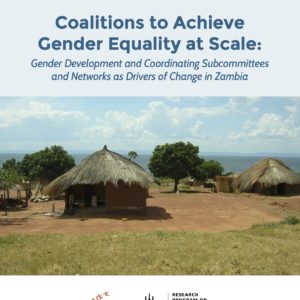
This brief summarizes the findings of a scoping study conducted in February 2015 to understand the strengths and areas of growth of the gender development and coordinating
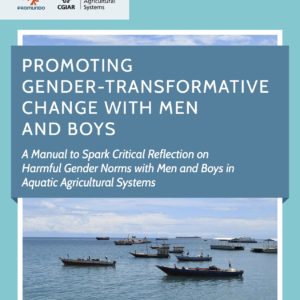
This manual, developed with WorldFish, contains 13 activity-based group sessions to engage men and boys in aquatic agricultural systems in gender-transformative dialogue. The sessions focus on understanding
The report “This isn’t the life for you”: Masculinities and Nonviolence in Rio de Janeiro, Brazil presents the results of the adaptation of the International Men and
A flagship report produced by Equimundo as a MenCare publication, State of America’s Fathers aims to increase the visibility and value of care work in the United
Involving men in fatherhood and caregiving has enormous potential to transform the lives of men and women in Portugal and around the world. With this in mind,
Men, Masculinities and Climate Change: A Discussion Paper aims to establish a rationale for understanding boys’ and men’s multiple roles in climate change by conducting an analysis
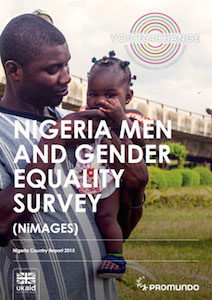
This report presents results from the Nigeria Men and Gender Equality Survey (NiMAGES), based on the methodology of the International Men and Gender Equality Survey (IMAGES) and conducted

This report presents results from the “Men and Gender Equality in the Republic of Moldova” study, based on the methodology of the International Men and Gender Equality
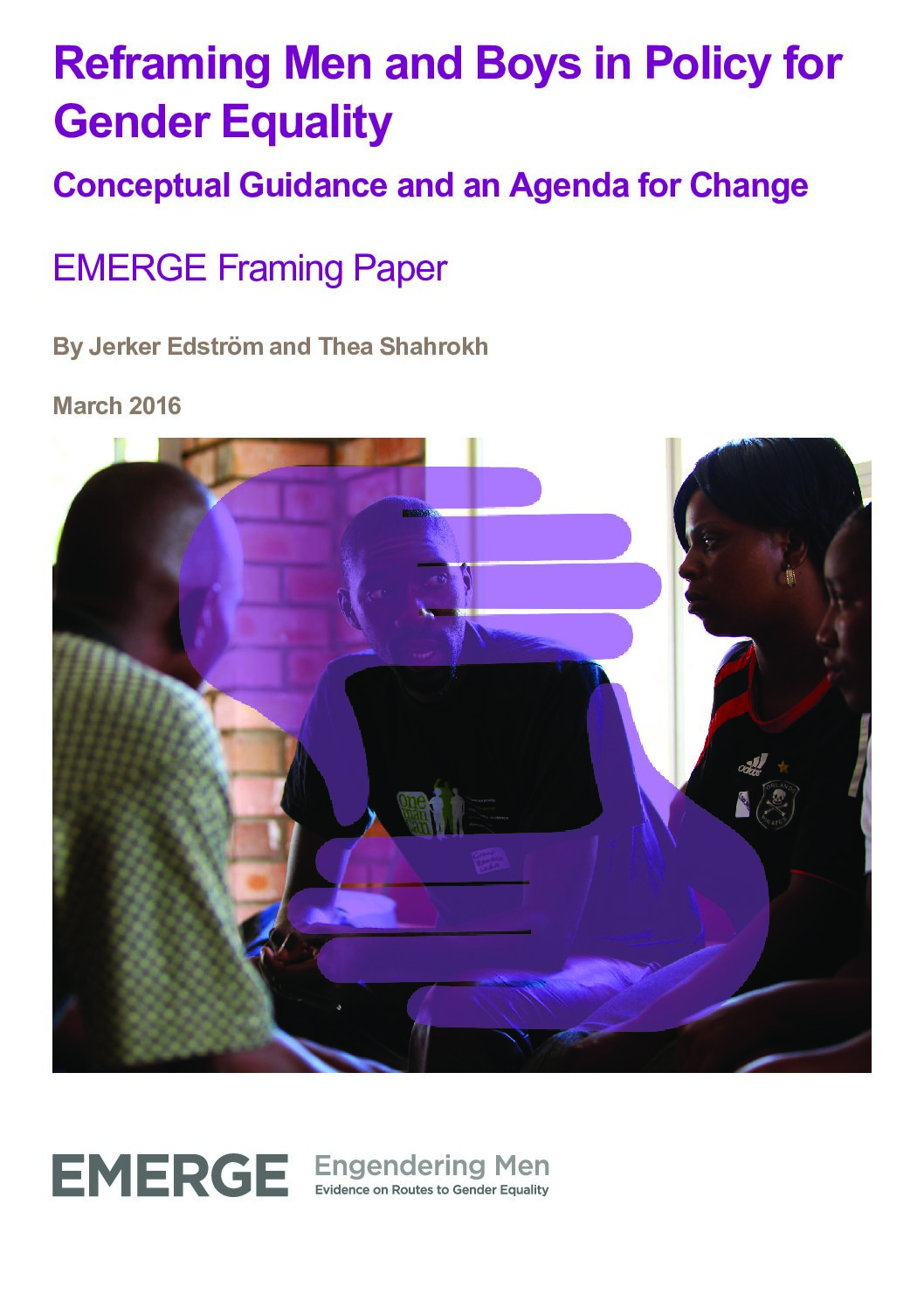
Engendering Men: Evidence on Routes to Gender Equality (EMERGE) is a two-year project to build an open repository of accessible evidence and lessons for working with men
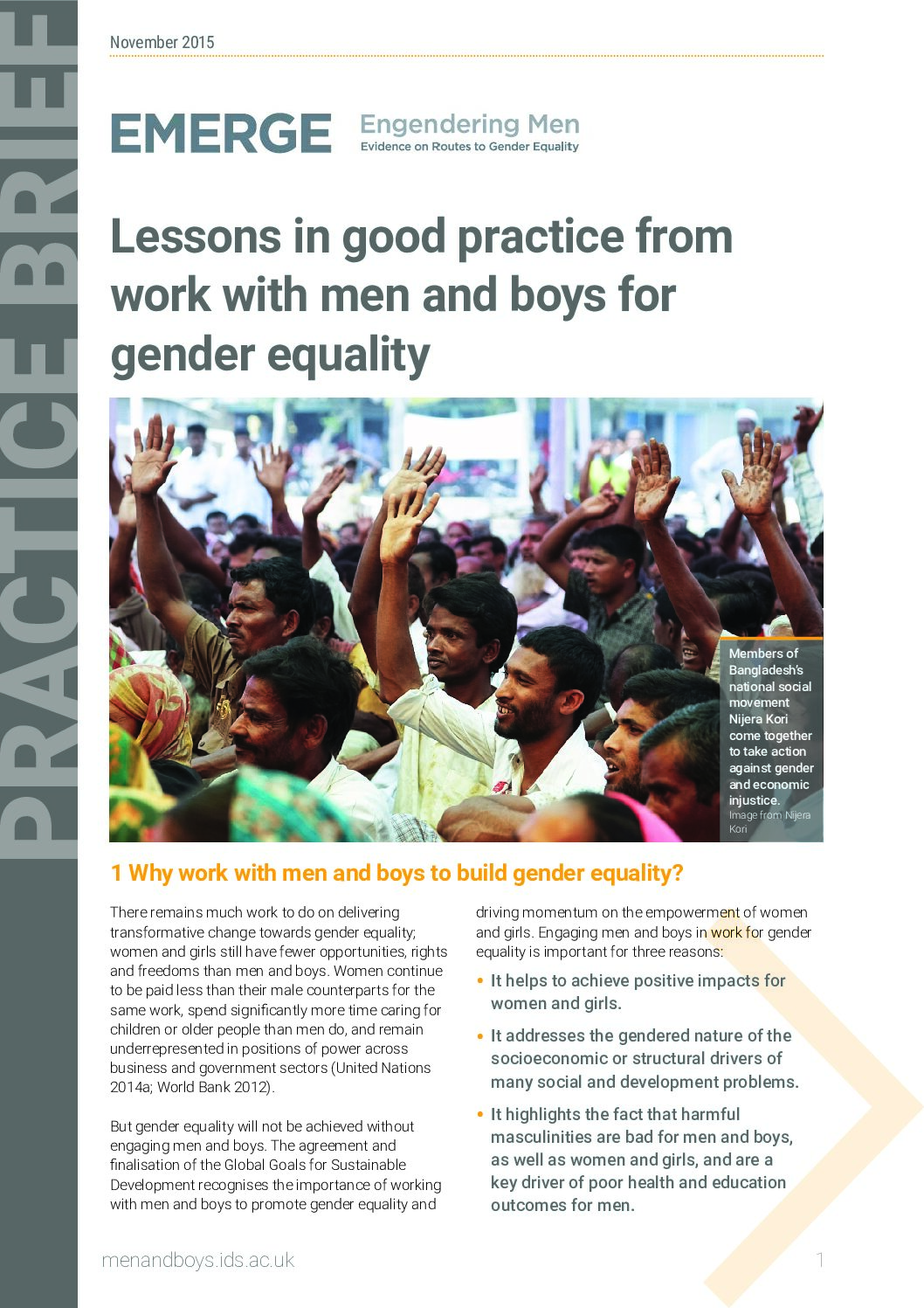
Engendering Men: Evidence on Routes to Gender Equality (EMERGE) is a two-year project to build an open repository of accessible evidence and lessons for working with men
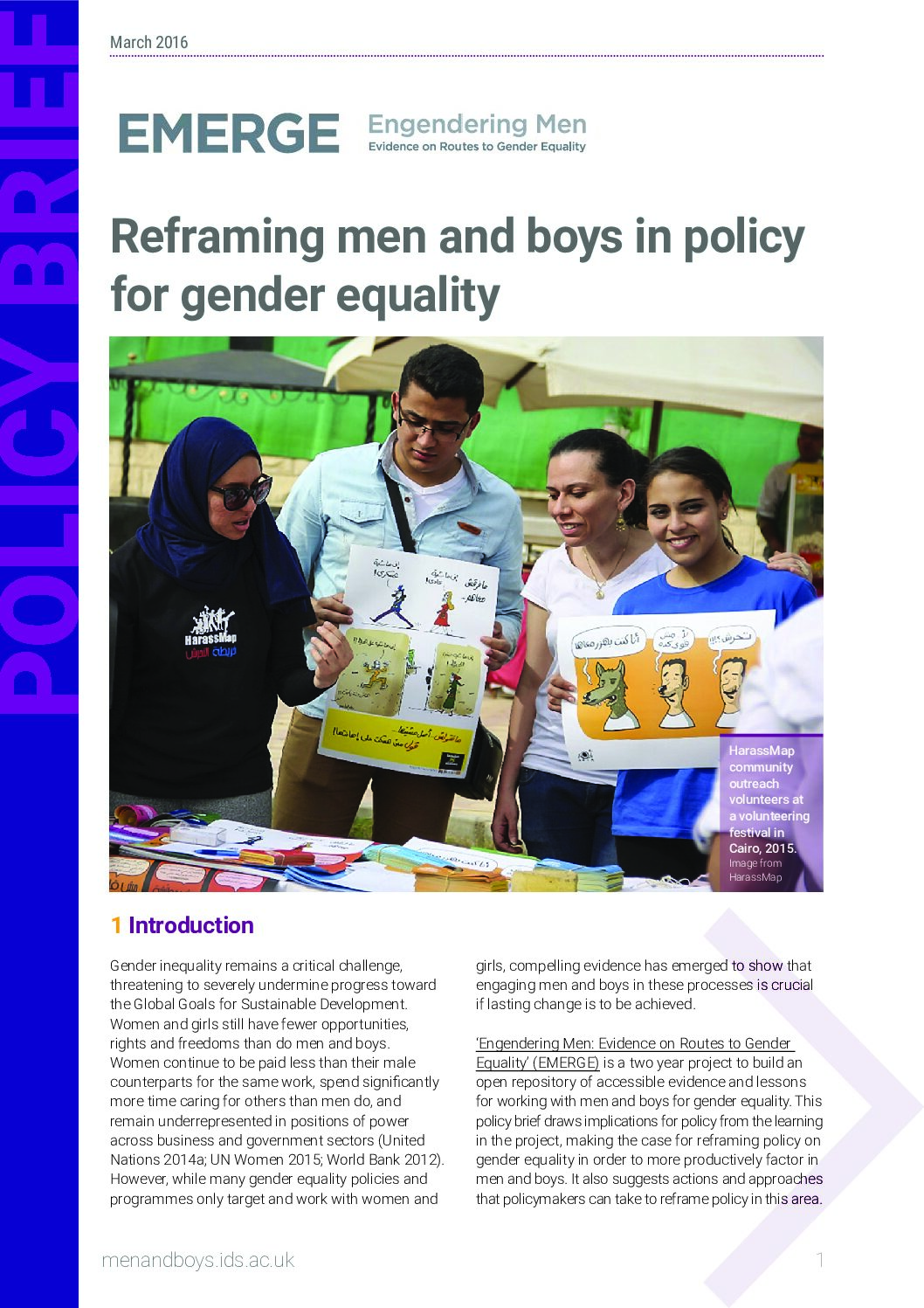
Engendering Men: Evidence on Routes to Gender Equality (EMERGE) is a two-year project to build an open repository of accessible evidence and lessons for working with men

This report highlights the importance of engaging adolescent boys and young men in sexual and reproductive health and rights and in gender equality. It reviews current research
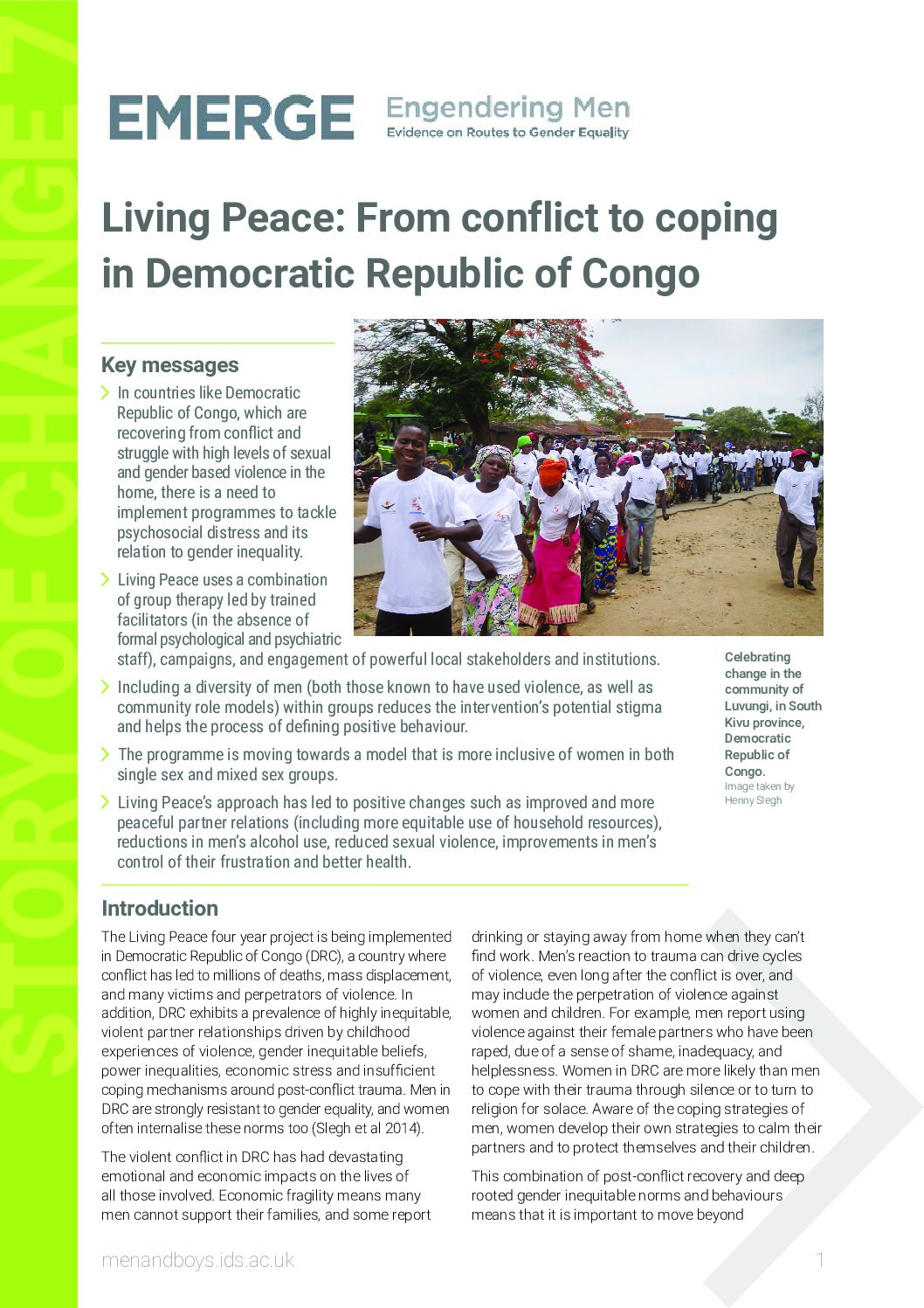
This story of change pulls out the main findings and recommendations from Living Peace: EMERGE Case Study, which focuses on the work of Living Peace in DRC. This
Conflict in Democratic Republic of the Congo (DRC) has caused millions of people to lose their lives, suffer displacement or become the victims or perpetrators of violence.
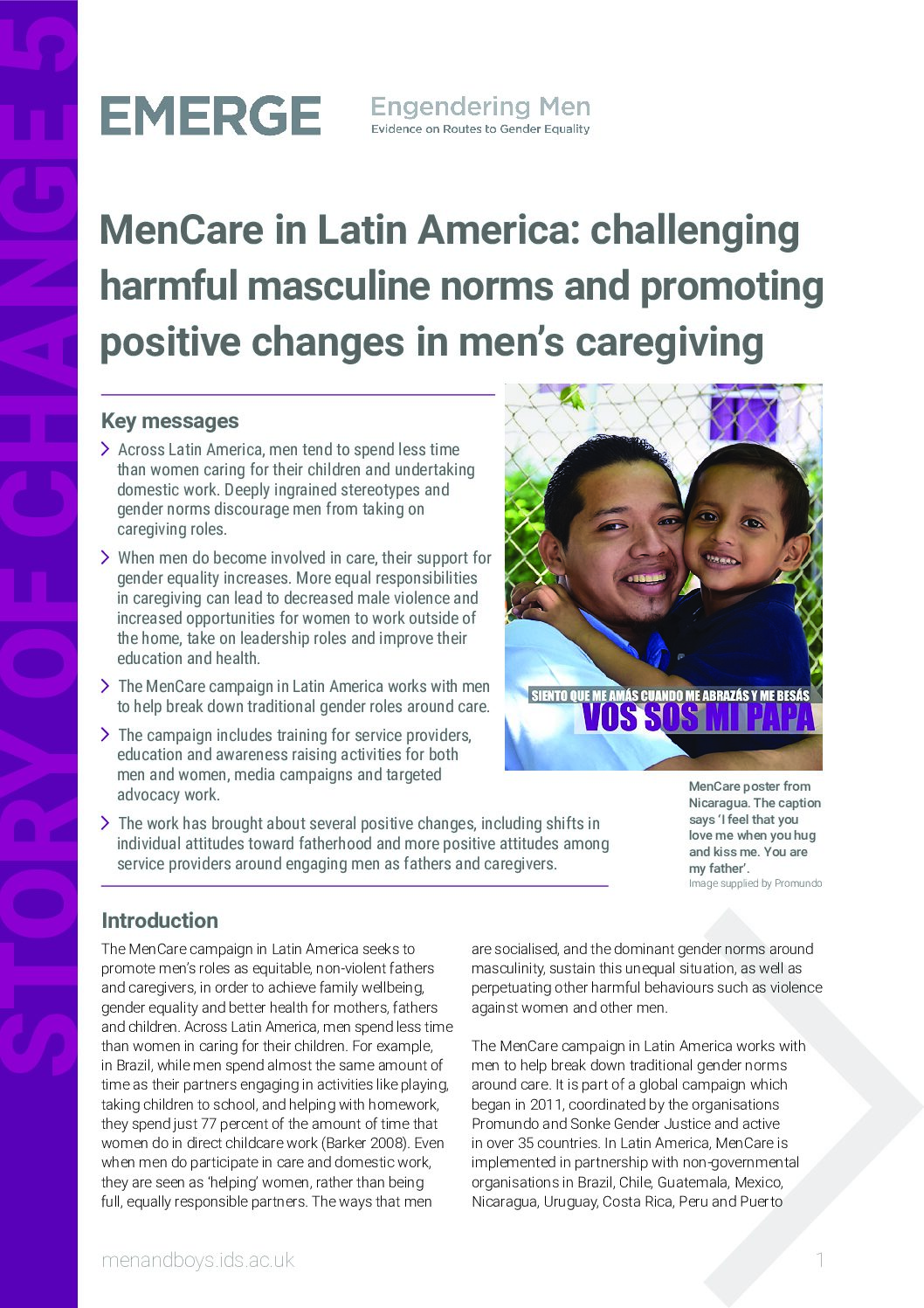
This story of change pulls out the main findings and recommendations from MenCare in Latin America: EMERGE Case Study, which highlights the MenCare campaign in Latin America
This study details the implementation and impact of MenCare – a global fatherhood and caregiving campaign – in its engagement of men as involved, non-violent fathers for
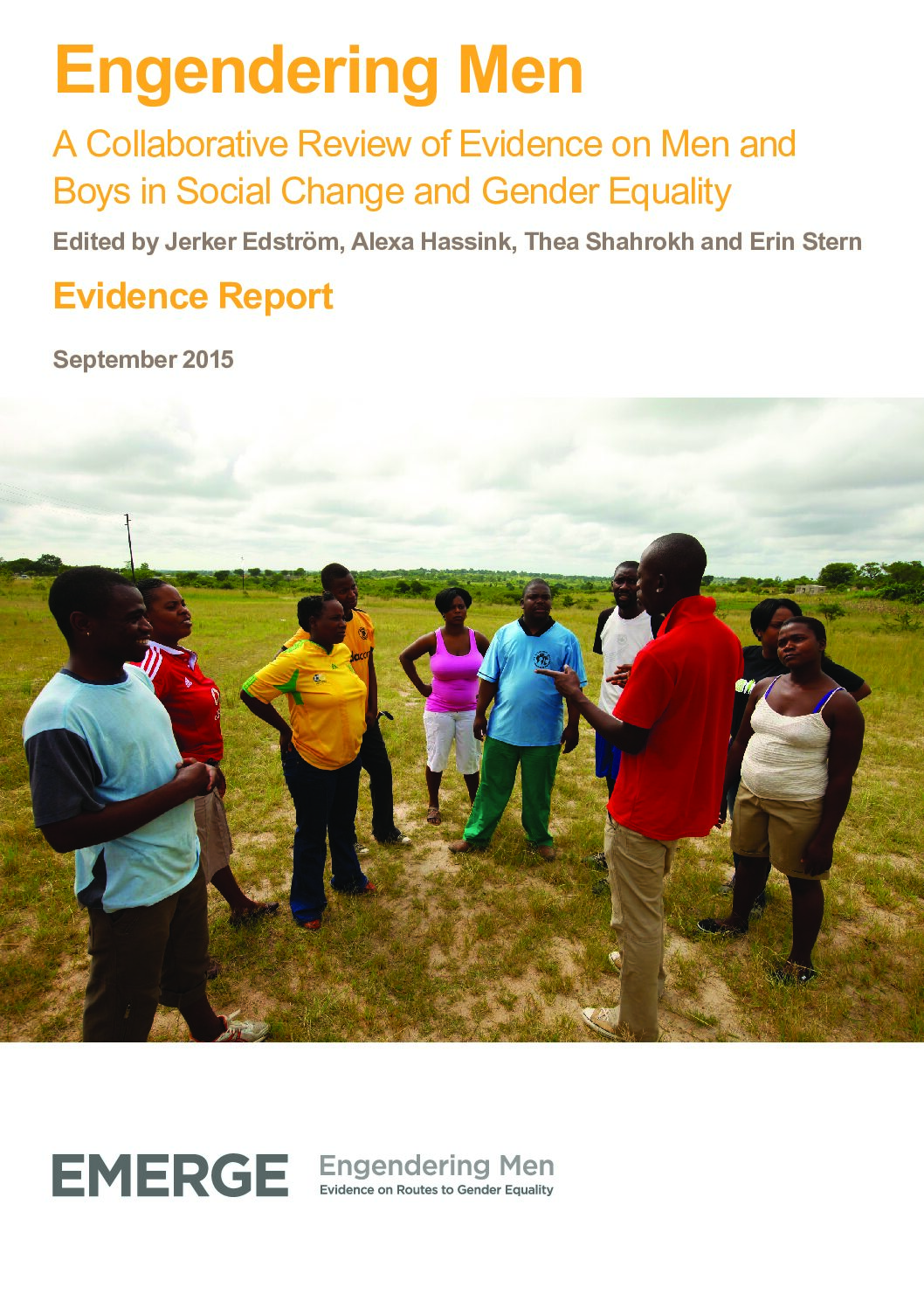
This evidence report, produced as part of the EMERGE project, critically assesses trends and shifts in engaging men and boys for gender equality over the past 20

Starting in 2015, Equimundo and partners began implementing a four-year expansion of the innovative Living Peace program throughout the North and South Kivu provinces in eastern Democratic
After years of focusing overwhelmingly on the mother–child dyad, child development as a field has “discovered” fathers. In the Bernard van Leer Foundation’s Early Childhood Matters, Equimundo’s
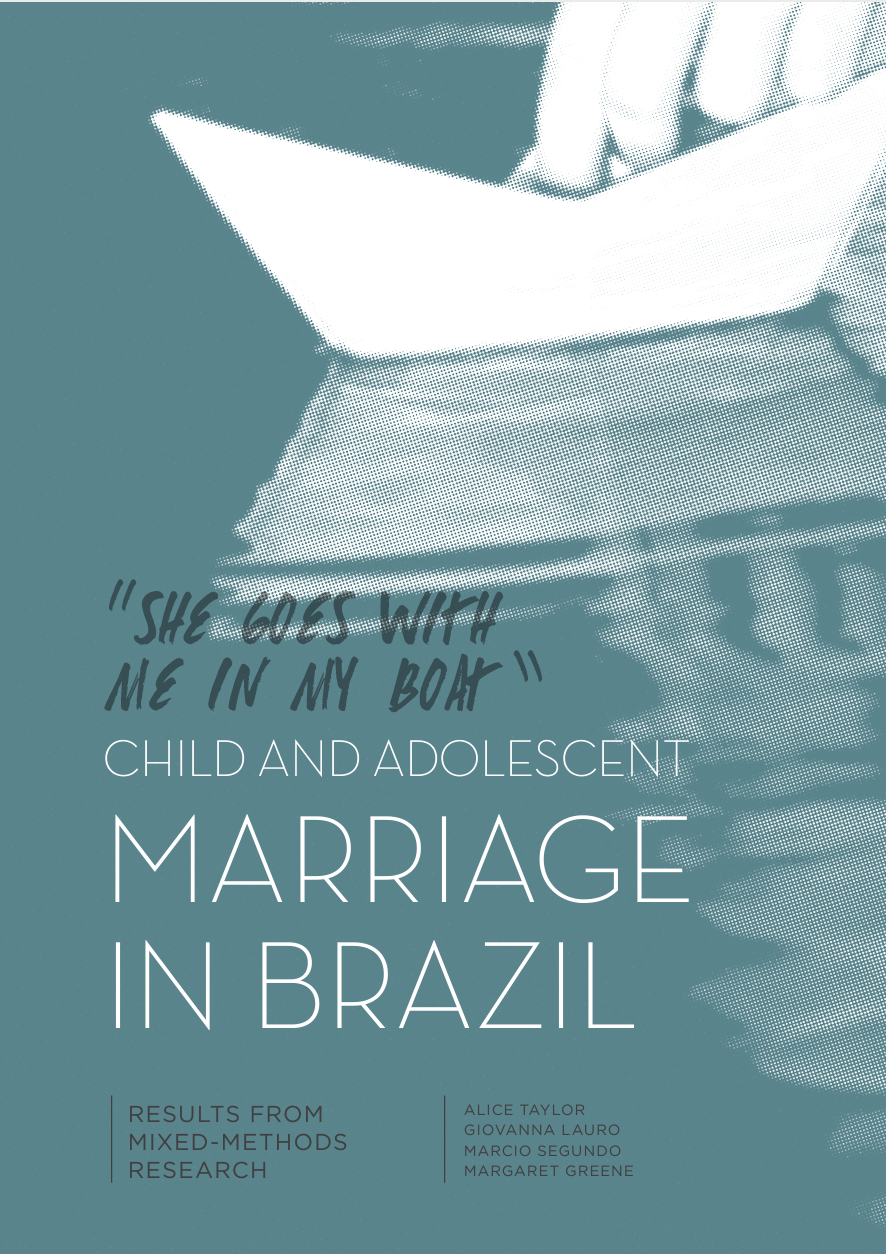
This study, the first of its kind in Brazil, explores attitudes and practices around child and adolescent marriage in Pará and Maranhão, two Brazilian states with highest prevalence of the practice. The results confirm the mostly informal and consensual nature of unions involving girls under the age of 18 in the settings studied.
Brazil – like the rest of Latin America – has been absent from many global discussions and actions around child and adolescent marriage, which largely focus on

The report “This isn’t the life for you”: Masculinities and Nonviolence in Rio de Janeiro, Brazil presents the results of the adaptation of the International Men and Gender Equality
 English
  Français
  Português do Brasil
  Español de México