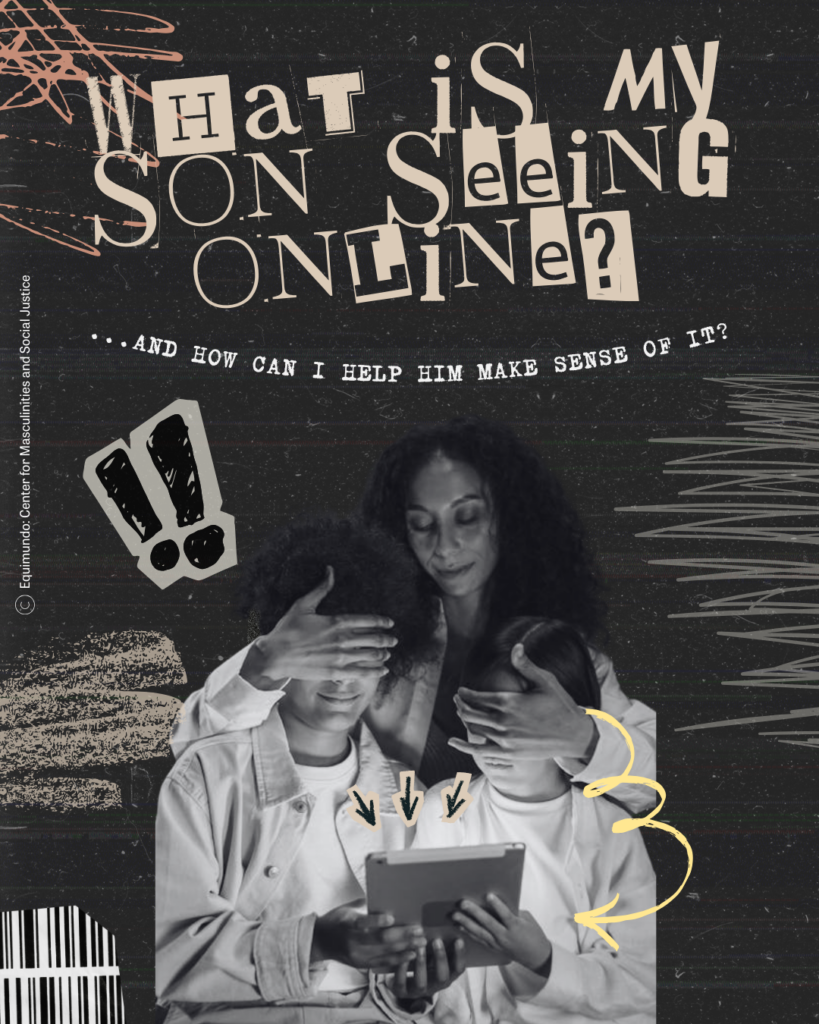
If you are raising a boy today, you may have found yourself asking a question that feels impossible to answer:
“What is my son seeing online?“
Not what you assume he is watching. What is he being fed, minute by minute, by corporate algorithms designed to keep him scrolling?
In a estudar from Dublin City University’s Anti Bullying Centre, researchers found that boys and young men were exposed to misogynistic content within the first 23 minutes of scrolling on social media. That is the length of a short walk. One episode of a sitcom. The time it takes to start dinner.
So when parents ask, “how did my kid end up here?,” the answer is often unsettling: the online systems he uses were designed to surface this content to him. We can try to respond with monitoring and restriction. Boundaries and safety settings matter. But even the most engaged parent cannot keep pace with algorithms that never stop.
It is not surprising, then, that governments are stepping in. Australia recently moved forward with a social media ban for young people under 16, and the UK has proposed restrictions of its own. Yet bans do not mitigate harms once you begin using the platform. Social media companies must be held accountable for the harms their products create and amplify.
But caregivers cannot legislate the internet from the kitchen table. What they can do is strengthen how boys interpret what they see online. That is digital literacy. Addressing boys’ digital literacy is therefore not about shifting concern away from others, but about confronting the parallel and interconnected harm that shapes the online ecosystem as a whole.
Equimundo’s State of American Men 2023 report puts it plainly: online spaces are now the primary place young men spend their time. Boys are living online. They are building identity, looking for belonging, and learning what to value there. The internet is ready to offer them a script. Too often, that script is built on rigid gender norms, that can fuel resentment, and exploit insecurities to capture boys’ attention and keep them coming back for more. This is a key feature of what we call the manosfera. It is not one influencer or one niche forum. It is an ecosystem. It pulls boys in via topics they are searching for: body image and fitness, video games, dating, loneliness, mental health. What starts as “self improvement” can quickly turn into messaging that teaches boys who deserves respect and who deserves contempt.
Equimundo’s Manosphere Rewired report captures what is happening in real time: amid rapid social, political, and economic change, young men are turning to the internet for belonging and to find communities that speak to their unique identities, interests, and fears. The manosphere fills a messaging void for boys’ questions and insecurities, but it can have real world consequences in terms of violence toward themselves and others, mental health, and anti-democratic trends.
One of the biggest challenges is that adults often miss what this content looks like in real time. Misogyny does not always show up as obvious hate. Sometimes it shows up as “motivation.” Sometimes as “brutal honesty.” Sometimes it shows up as a joke that teaches boys what to mock, what to dismiss, and what to blame.
Meanwhile, the guidance boys need is often missing. Most adults did not grow up with this version of the internet. Few have been given practical tools for how to talk to boys about what they are seeing and how it is shaping them.
Trends and algorithms move too fast for anyone to “keep up” through monitoring or restricting alone. We cannot catch every piece of harmful content. But we can help boys build the skills to recognize it, question it, and resist it.
That is the moment we are in. And it is why Equimundo, Amaze, and Futures Without Violence have teamed up to build something designed to meet it.
Drawing on the work of the Laboratório LinkUp, we’re creating five videos for young people on manosphere related themes, paired with a resource hub for adults. Not a lecture. Not a panic button. Practical tools for parents, educators, and mentors who want to open a conversation and respond without causing shame or escalation.
The five topics our videos and tools will cover are:
- Body image and online exposure, including looksmaxxing.
- Video games and mental health.
- Digital sexual violence, including deepfakes.
- Dating online and offline.
- Loneliness in a digital world.
These are not abstract issues. They are common entry points for harmful messaging, often in ways adults never see until it is already influencing how boys think and act.
For example, our first video focuses on looksmaxxing, a trend that tells boys their value depends on how closely they match a narrow aesthetic standard of masculinity and attractiveness. It can sound like self improvement, but it often exploits insecurity, obsession, and comparison. It can also funnel boys toward communities that profit from boys feeling not good enough.
You may never be able to fully answer the question, “What is my son seeing online?”, but you can help him build the digital literacy skills to pause and question what he is seeing. As a starting point, watch the looksmaxxing video, share it with the boys and young people in your life, and use the discussion guide to spark conversations that help them think critically about what they see online.
For more information check out our Media Literacy for Boys resource hub.
 Português do Brasil
  English
  Français
  Español de México