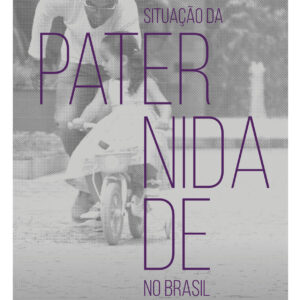
Equimundo Launches First Report on the State of Brazil’s Fathers
Men’s involvement in domestic chores and caregiving matters, as revealed by the growing body of studies emerging from around the world over the last two decades. There
Men’s involvement in domestic chores and caregiving matters, as revealed by the growing body of studies emerging from around the world over the last two decades. There
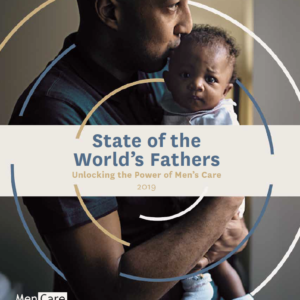
State of the World’s Fathers, produced by Equimundo, is a globally recognized, biennial report and advocacy platform aiming to change power structures, policies, and social norms around
This research brief presents nationally representative survey data and focus group discussions in the United States on male allyship for gender equality. Results from the study provide
Program D was developed based on evaluations of the Program H and M manuals, which demonstrated effectiveness in transforming harmful norms around gender and sexuality among young
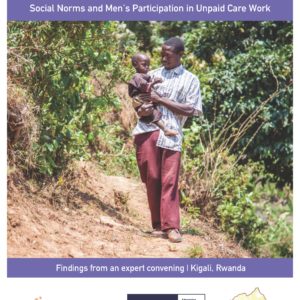
In November, 2018, Equimundo convened a group of global and regional experts for a two-day meeting to discuss the role of social norm change in achieving equality in
This report has been temporarily removed at the request of UN Women.
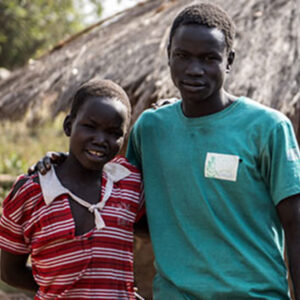
Women’s unequal share of unpaid care work – necessary yet uncompensated childcare and housework – is a critical component of their economic inequality. It prevents women from participating equally in the labour market and affects the type, location, and nature of paid work they can take on.
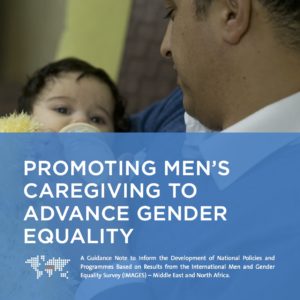
This guidance note draws data and recommendations from the International Men and Gender Equality Survey – Middle East and North Africa (IMAGES MENA) on the topic of promoting
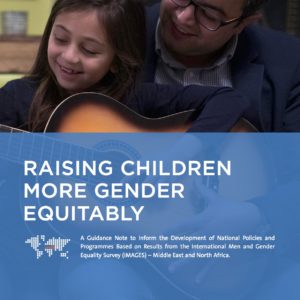
This guidance note draws data and recommendations from International Men and Gender Equality Survey – Middle East and North Africa (IMAGES MENA) on the topic of raising children

Equimundo-Europe, in collaboration with the Centre for Social Studies of the University of Coimbra and the Coimbra School of Nursing, launched its first report on the State of Involved and Nonviolent Fatherhood in Portugal at “Big Plans for Equality,” the fourth meeting of health professionals hosted by the Association for Family Planning in Lisbon on May 31.
When Mark Zuckerberg takes paternity leave, the world takes note. While we applaud his ability to “lean out,” we don’t generally talk about the support that a father – or any parent – needs to do it (and just how many don’t have it).

For many American fathers, there’s still a disconnect between what they want, and what they think they can do. They may want to be equal partners, to share the joys and responsibilities of parenting with their partner, but a triple combination of antiquated gender norms, sclerotic workplace culture and lack of family-friendly policies knock that choice off the table.

My colleague had a baby and her husband decided to take a 12-month leave from his job to stay home with the newborn. We, her co-workers, were all surprised, if not shocked. That was nearly 20 years ago. We likely would have been as surprised today. And we wouldn’t have been alone in our American reaction, as we are one of a handful of countries without mandatory paid leave for either parent.
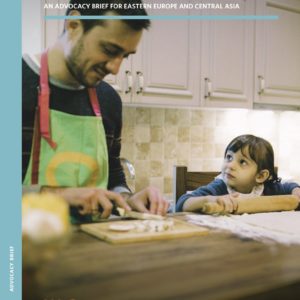
Unpaid care work is one of the key drivers of women’s inequality. In Eastern Europe, it is also an element in continuing low fertility as the prospect
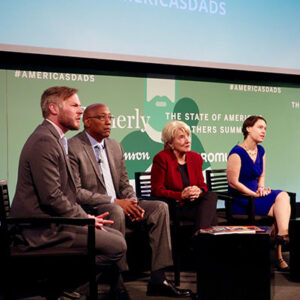
In advance of Father’s Day, Equimundo launched the first-ever State of America’s Fathers report as a MenCare publication. From New York to Los Angeles and Washington, DC, the country’s

In the U.S., women’s health rights have recently faced numerous setbacks in the Supreme Court, women continue to bear the brunt of unpaid care work for families,
Fatherhood is in the news, whether it’s high-profile dads or renewed pushes for paid leave in the District of Columbia, New York City, and beyond. For those of us urging equality between men and women in the workplace, the discussion is rightly focusing on whether men are, should be, or even can do half of the daily caring for children and housework. But elsewhere, in our court system, custody wars continue, and state child-welfare systems spend millions getting nonresident fathers to pay child support. That leads to a lot of strong opinions about fathers and modern fatherhood. But what’s really happening?
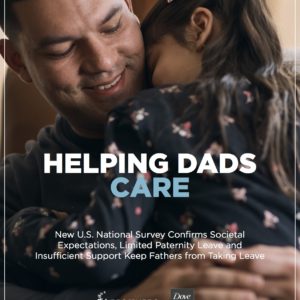
Equimundo and Dove Men+Care partnered to carry out a pioneering study, surveying over 1,700 men and women aged 25 to 45 in the United States, on what
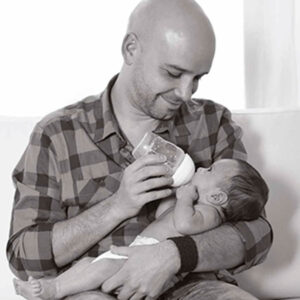
Earlier this year, several major corporations sponsored a night in one of the Smithsonian’s flagship museums in Washington, D.C., for more than 400 “daddy bloggers.” Their motivation? Fathers are now as likely as mothers to be deciding what food, toys, children’s books and clothing to buy.
This month, more than thirty men allegedly gang-raped a sixteen-year-old girl in Brazil because of her supposed infidelity to her boyfriend. A few months before that, my organization, Equimundo, carried out a study finding that nearly half of girls interviewed at a school in eastern Democratic Republic of Congo reported having traded sex for money.
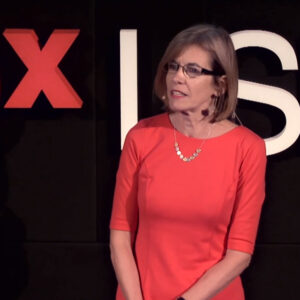
Last year, Nikki van der Gaag co-authored a groundbreaking study on the world’s fathers after realizing they were absent from most research. This year, she’s honing in on fatherhood in specific regions and delving into the cultural context behind men’s involvement in their children’s lives. In this interview, Nikki van der Gaag joins David Michael Newstead to discuss her research, gender equality, and Ryan Gosling.
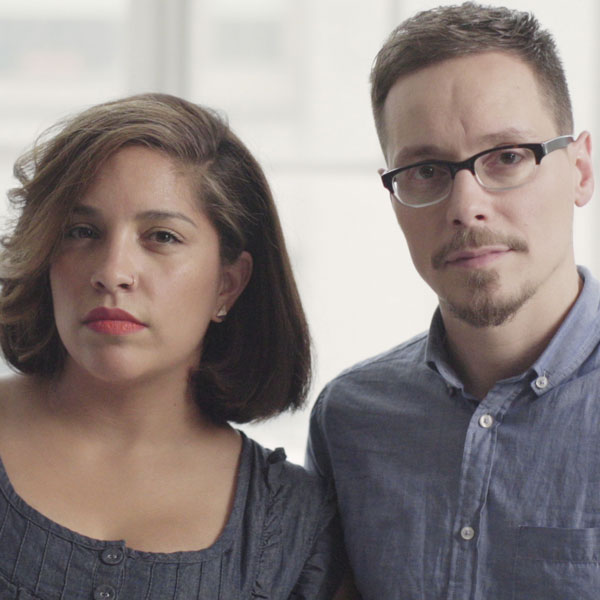
What are America’s dads saying about fatherhood? This Father’s Day, take two minutes to watch men from around the United States share their experiences of fatherhood in
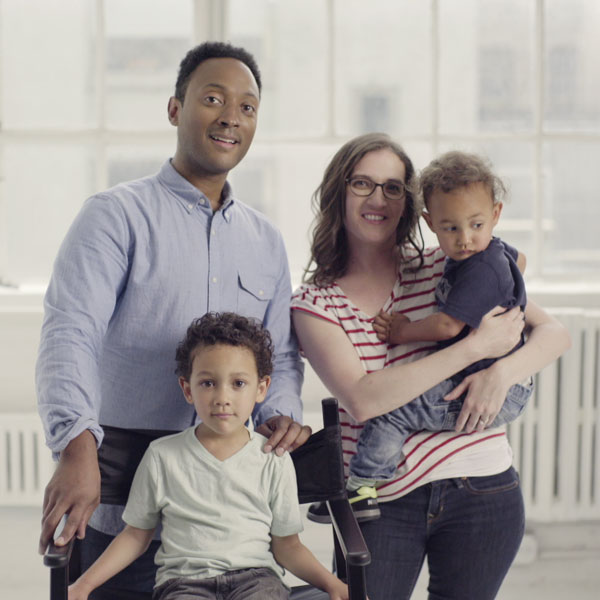
Today, we’re launching the country’s first State of America’s Fathers report – a landmark analysis of fatherhood. Fathers in the United States are more involved than ever before,
“I always win when I put my family first.” Ahead of the first-ever State of America’s Fathers report release, this is what America’s dads are saying about
 English
  Français
  Português do Brasil
  Español de México