Children and Teachers Can Challenge Gender Stereotypes in Primary Schools, New Report Finds
An evaluación across 24 schools in England finds that children can develop more gender-equitable attitudes and that teachers can become more confident challenging gender stereotypes in the classroom.
Para consultas de los medios de comunicación, comuníquese con: press@equimundo.org
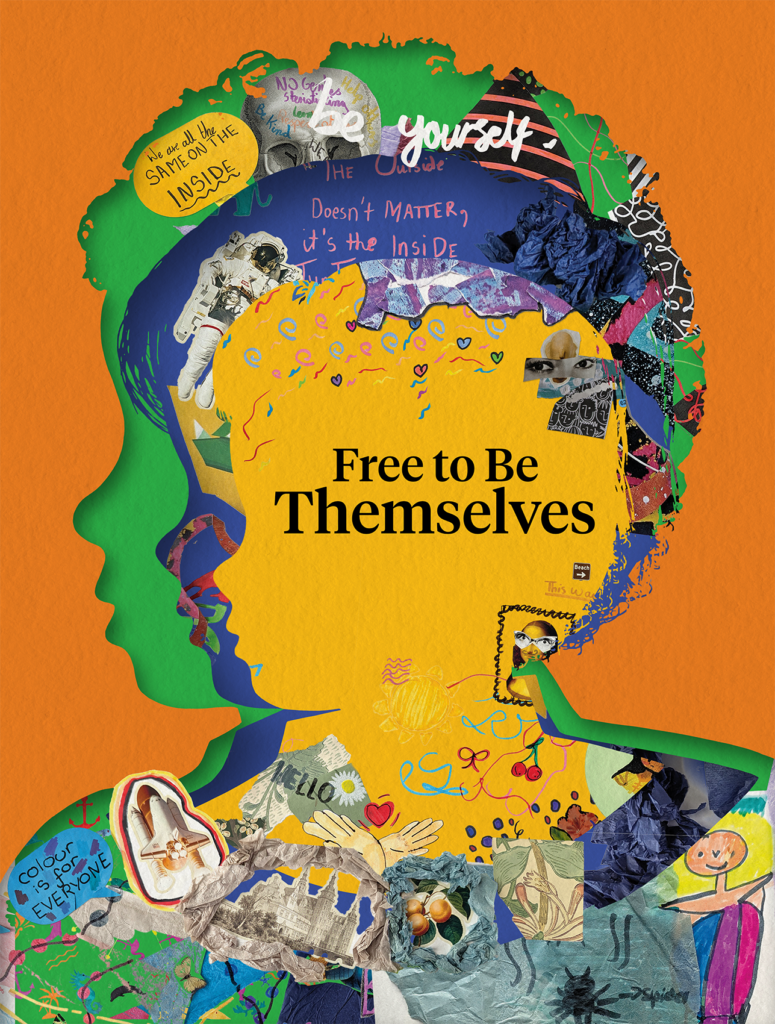
September 2026, LONDON, UK – Children can challenge gender stereotypes from primary school age, according to Free to Be Themselves, a nuevo informe from Equimundo: Center for Masculinities and Social Justice and The Children’s Society. The evaluation found that children who took part in the Beyond Gender Stereotypes programme showed more equitable attitudes about friendship, care, emotions, and future careers. Teachers also reported greater confidence in recognising and challenging gender stereotypes in the classroom.
Free to Be Themselves evaluates Beyond Gender Stereotypes, a programme for children ages 7–11 and their educators developed by Equimundo and Lifting Limits, a programme of The Children’s Society. The programme was delivered during the 2025–26 school year and is designed to help children question restrictive gender stereotypes, build emotional and relational skills, and create respectful, inclusive learning environments.
El evaluación involved 24 schools in England, including 2,300 pupils who took part in the programme, 1,000 pupils in control schools, and 300 educators. It found differences in children’s attitudes about boys expressing affection, friendships across genders, and whether careers should be limited by gender.
The findings also point to the role primary schools can play in helping children examine gender stereotypes before they become more deeply established. Rather than focusing only on whether a stereotype is right or wrong, the programme gave children opportunities to think about how gender expectations affect emotions, friendships, care, and the futures they imagine for themselves.
Key findings
- 80% of participating pupils said it was okay for boys to hug their friends and carers, a significantly higher proportion than among pupils in control schools.
- Significantly more pupils said anyone can pursue any career, regardless of gender.
- Pupils reported greater confidence making friends and playing with peers of all genders.
- More than two-thirds of pupils wanted to continue talking about gender stereotypes with friends, parents, and carers.
- Teachers reported a significant increase in confidence in helping pupils challenge gender stereotypes.
“Free to be Themselves shines a light on the importance of early intervention. That said, we must ensure discussions around gender equality include both boys and girls. The message from our report is clear: the challenge facing schools is not if they should address gender stereotypes, but whether they are sufficiently supported to do so,” said Mark Sanderson, Director of Equimundo UK.
“Concerns about children’s wellbeing, online misogyny, gender-based violence and boys’ mental health are rising across the UK. Our report argues that prevention cannot begin in adolescence or adulthood. We must give primary schools the tools to support children to thrive,” said Kirsty Ruthven, Service Manager at The Children’s Society.
“At Cummins, we believe strong communities are built when everyone has the opportunity to reach their full potential. Through Cummins Powers Women, we’re proud to partner with Equimundo and The Children’s Society to help challenge limiting gender stereotypes, expand opportunities and create more inclusive learning environments for children across the UK,” said Desmond McMenamin, Cummins Inc. Regional Leader.
[Download Free to Be Themselves]
Methodology
Equimundo, in partnership with The Children’s Society, conducted the Phase 3 evaluation of Beyond Gender Stereotypes during the 2025 – 26 academic year. The evaluation examined outcomes among pupils and educators and the program’s effectiveness in creating classroom environments where gender stereotypes affecting boys and girls could be discussed and challenged.
Twenty-four schools in England participated in the evaluation. The study included 2,300 pupils who took part in Beyond Gender Stereotypes, 1,000 pupils in control schools, and 300 educators.
About Beyond Gender Stereotypes
Beyond Gender Stereotypes is a free, evidence-based programme for children ages 7–11 and their educators. Developed by Equimundo and Lifting Limits, it helps children challenge restrictive gender stereotypes, build emotional and relational skills, and create respectful, inclusive learning environments.
The programme addresses stereotypes affecting girls and boys and encourages boys to be caring, connected, and allies for equality. It includes classroom lessons, CPD-accredited teacher training, teaching guidance, and resources for parents and carers. The programme aligns with England’s PSHE, Relationships and Sex Education, and Health Education requirements.
Acerca de Equimundo
Equimundo: Center for Masculinities and Social Justice works globally to promote care by and for men and boys, reduce violence and inequity, and achieve well-being for all. Through research, programs, and advocacy, Equimundo works with partners to advance gender equality and social justice.
About The Children’s Society
The Children’s Society is a national charity working to improve the lives of children and young people, particularly those facing the greatest challenges, and to ensure their voices are heard in decisions affecting them. Its Lifting Limits programme trains professionals to support children, parents, and carers to overcome gender stereotypes.
¿Tienes preguntas o quieres cubrir esta historia?
Contáctenos en press@equimundo.org
 Español de México
  English
  Français
  Português do Brasil