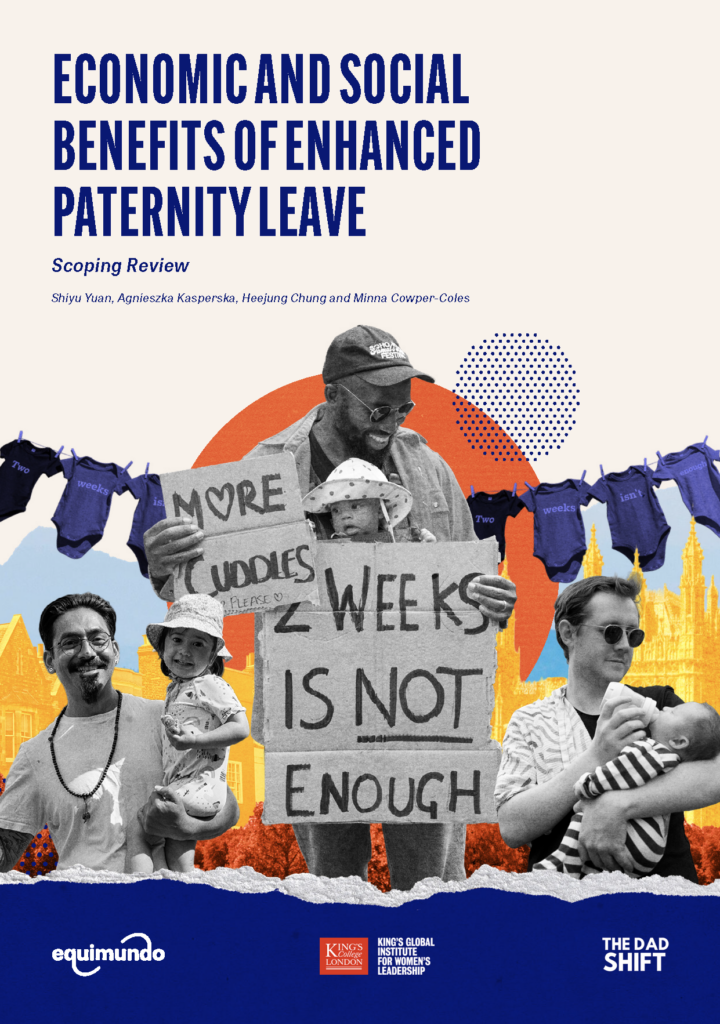
Six Weeks of Paid Paternity Leave Could Add £2.68 Billion to the UK Economy and Reduce Relationship Breakdowns
A global review by King’s Global Institute for Women’s Leadership and Equimundo of 33 studies across 11 OECD countries finds that well-paid leave reserved for fathers can increase shared care, support mothers’ employment, narrow gender gaps, and reduce relationship breakdowns.
Para consultas de los medios de comunicación, comuníquese con: press@equimundo.org
September 2026, LONDON, UK – Six weeks of paid paternity leave could add a net £2.68 billion a year to the UK economy, according to a new global review from King’s Global Institute for Women’s Leadership in partnership with Equimundo: Center for Masculinities and Social Justice.
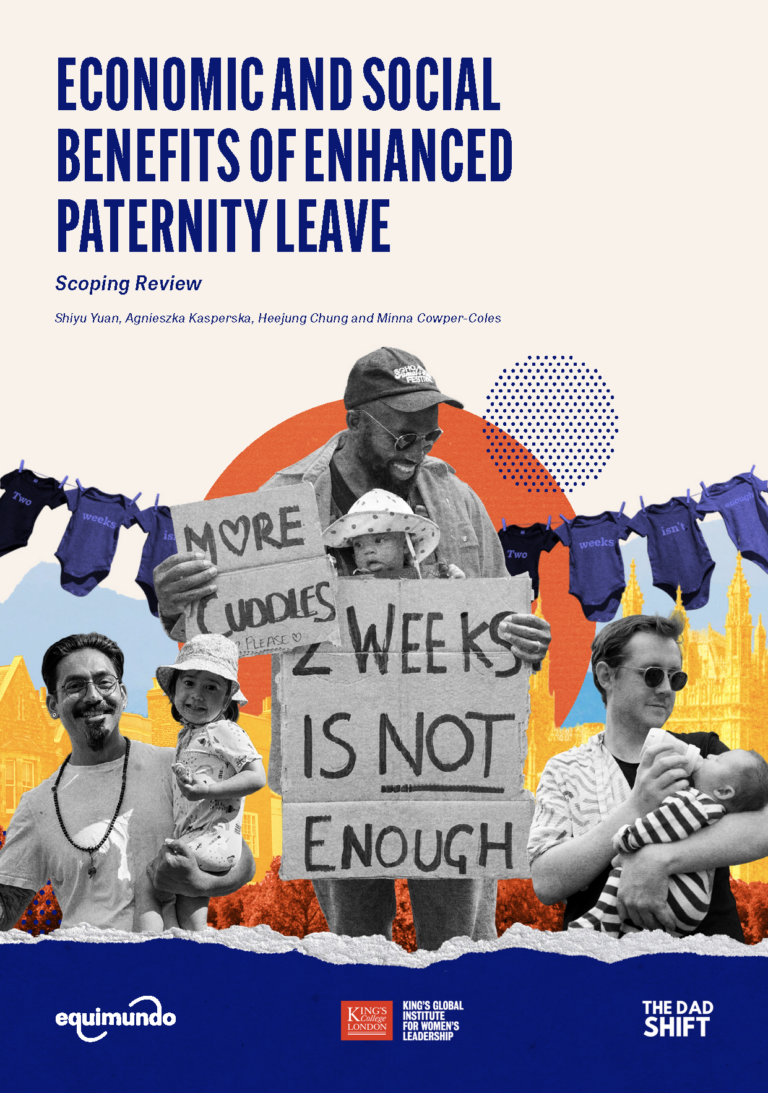
Economic and Social Benefits of Enhanced Paternity Leave: Scoping Review examines 33 studies of paternity and parental leave reforms across 11 OECD countries. The research found that fathers are far more likely to take leave when it replaces a substantial share of their wages and is reserved for them. Fathers who took leave also did more childcare and housework afterwards, in some cases for several years.
El review also found evidence linking longer, more generous leave for fathers with lower rates of relationship breakdown. In Iceland, couple separations fell by 12 percentage points after four weeks of non-transferable leave for fathers were added to the country’s parental leave system. A U.S. study found parental separation fell from 7.5% to 5.6% following the introduction of parental leave.
The report has been shared with government ministers involved in the UK’s ongoing parental leave review. It comes as dual employment among couples with dependent children has continued to rise over the past 20 years.
Key findings
- Six weeks of paid paternity leave could deliver a net £2.68 billion annual gain to the UK economy. El modelling considers six weeks of leave paid at 90% of a father’s average weekly earnings, capped at £1,200 a week. Higher maternal employment and working hours could generate £5.5 billion in additional economic output. After accounting for an estimated £2.8 billion associated with fathers spending time away from work, the net annual gain is £2.68 billion.
- Reserved, well-paid leave substantially increases the number of fathers who use it. In Quebec, reforms introduced five weeks of leave reserved for fathers and paid at around 70% of earnings. The proportion of fathers taking leave rose from 21% to 74%.
- Paternity leave can support mothers’ employment and a more equal division of care. Following the Quebec reforms, mothers’ labour market participation and full-time employment increased by around five percentage points. Fathers affected by the reform were still doing more unpaid work at home one to three years later.
- Longer and better-paid leave was linked to fewer relationship breakdowns. Ten of the studies reviewed identified reduced relationship breakdown as a benefit of more generous and longer leave entitlements.
At the time of publication, UK fathers receive up to two weeks of statutory paternity leave, paid at £194.32 a week or 90% of average weekly earnings if that amount is lower. Government evidence indicates that 4% of fathers, or 5% of employee fathers, use Shared Parental Leave.
Based on the findings, researchers recommend six weeks of leave paid at 90% of normal earnings, reserved for the father or second parent and lost if unused. This leave would be separate from the mother’s entitlement. Researchers also recommend extending eligibility to self-employed parents and people on fixed-term, zero-hours, or temporary contracts, alongside clear employer guidance, support for smaller businesses, accessible childcare, and strong rights to flexible working.
“Paternity leave is still too often treated simply as a bill for government and employers. But the strongest evidence shows that when fathers have leave of their own and can afford to take it, they do more care at home and mothers are better able to stay in paid work, which benefits the country economically,” said Professor Heejung Chung, professor of work and employment and director of King’s Global Institute for Women’s Leadership.
“A few extra weeks that families cannot afford will not deliver the economic and social gains so many other countries have seen. Nor will asking mothers to give up part of their own leave. New dads need time that belongs to them and is paid well enough for them to use it,” said Shiyu Yuan, research assistant at King’s Global Institute for Women’s Leadership and co-author of the study.
“Around the world, we are seeing economies which have backed more equal relationships between dads and mums reap the benefits, from increased happiness, more equal relationships and indeed GDP growth. Expanding paternity leave is a vital step on the path towards care equality,” said Gary Barker, founder and CEO of Equimundo: Center for Masculinities and Social Justice.
[Download Economic and Social Benefits of Enhanced Paternity Leave: Scoping Review]
Methodology
Researchers reviewed 33 studies of paternity and parental leave reforms across Europe, Canada, and the United States. Most compared families affected by a policy change with similar families who were not, helping distinguish the effects of the reform from other changes taking place at the same time.
Results varied by country and family and depended on factors including how much leave paid, whether it was reserved for fathers, how families used it, and which outcomes each study measured.
Economic and Social Benefits of Enhanced Paternity Leave: Scoping Review was authored by Shiyu Yuan, Dr Agnieszka Kasperska, Professor Heejung Chung, and Dr Minna Cowper-Coles and produced in partnership with Equimundo: Center for Masculinities and Social Justice.
Acerca de Equimundo
Equimundo: Center for Masculinities and Social Justice works internationally and in the United States to engage men and boys as allies in gender equality, promote healthy manhood, and prevent violence. Through a research-first approach, Equimundo drives innovative solutions to shift norms, narratives, and policies – in partnership with women, girls, and individuals of all gender identities.
About King’s Global Institute for Women’s Leadership
Based at King’s Business School and chaired by Julia Gillard, King’s Global Institute for Women’s Leadership brings together research, practice, and advocacy to address barriers to women’s leadership and advance gender equality.
¿Tienes preguntas o quieres cubrir esta historia?
Contáctenos en press@equimundo.org
 Español de México
  English
  Français
  Português do Brasil