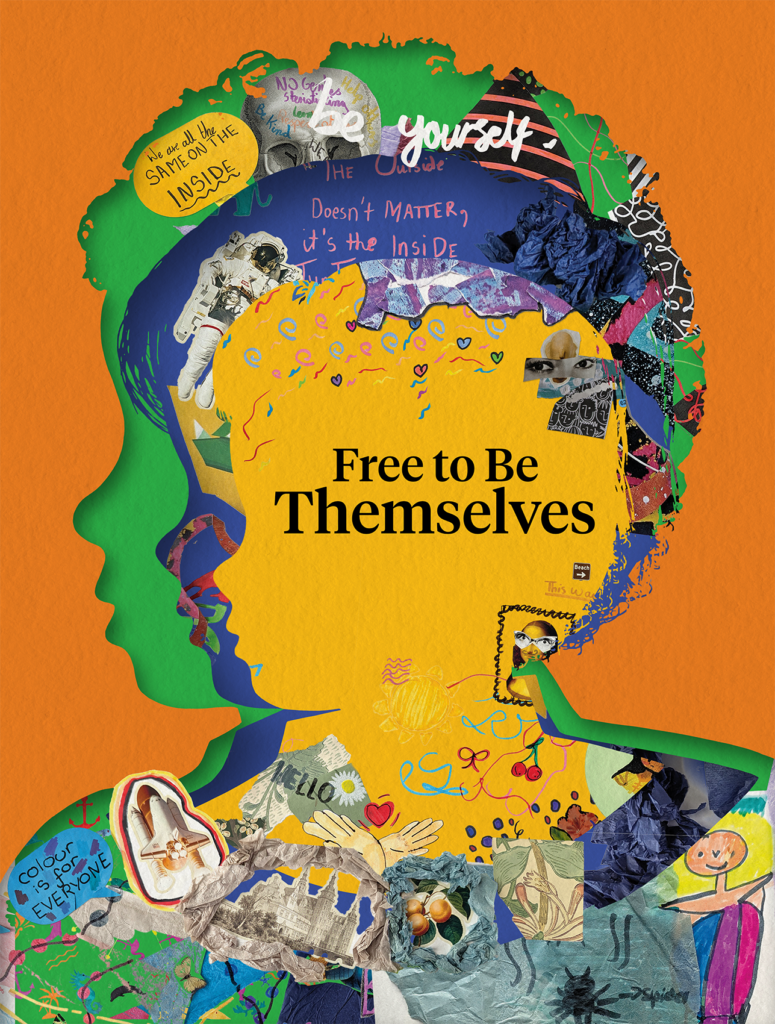
Beyond Gender Stereotypes (BGS) is a free, evidence-based programme designed to support educators and children aged 7 to 11 to challenge restrictive gender stereotypes, build emotional and relational skills, and create respectful, inclusive learning environments. BGS was co-created as part of the Global Boyhood Initiative with The Children’s Society’s Lifting Limits programme. BGS not only addresses stereotypes facing girls, but also includes an intentional focus on stereotypes affecting boys, to encourage them to be caring, connected, and allies for equality. When norms on masculinity are left out of gender equality programmes, boys tend to disengage from or reject messages around gender equality and girls’ empowerment.
BGS provides training, classroom resources and ongoing support aligned with England’s Personal, Social, Health and Economic (PSHE) education and Relationships and Sex Education (RSE) and Health Education.
The resources include:
- A 2.5 hour self-guided online learning course to equip teachers and school staff with the skills and knowledge they need to implement the lessons effectively, and to strengthen their own professional development.
- 3 lessons (1 hour each) for Years 3/4 (ages 7–9)
- 4 lessons (1 hour each for Years 5/6 (ages 10–11)
- Accompanying resource handouts and powerpoint slide decks
- Teach Guidance resource
- Guide for Engaging Parents and Carers
In the 2025-2026 school year, BGS was evaluated across 24 schools, 300 educators and 2,300 pupils, and found:
- BGS helped pupils to think critically about gender stereotypes from an early age – 80% of pupils in BGS schools felt it was okay for boys to hug their friends and carers, a significantly higher proportion than that seen in control schools.
- BGS helped educators recognise their unconscious biases that stem from gender stereotypes and improved their confidence in challenging them – teachers’ confidence to help pupils challenge gender stereotypes rose from 20% to 73%.
The evaluation findings have important implications for practice and policy. Education systems across England should adopt preventative, evidence-based approaches that recognise healthy boyhoods as an important component of wellbeing. These efforts should complement existing work to address gender-based violence and inequality through RSE guidance and the Violence Against Women and Girls (VAWG) Strategy. Schools should foster opportunities for dialogue and positive cross-gender relationships, while encouraging educators to reflect on their own assumptions and biases. Such approaches align with schools’ commitment to promoting respect, inclusion and opportunity for all children, and reflect pupils’ positive experiences of cross-gender engagement.
Are you a school in the United Kingdom that has used the BGS programme? We would love to hear about it! Please complete this short survey and as a thank you for your time, we will send you a £5 coffee voucher. Please note, that this offer is only available to schools in the United Kingdom. Please complete the survey using your school email address to receive the incentive. One voucher is available per school.
Recursos
Evaluation
Free to be Themselves: Evaluation Report
PDF AvanceMateriales del programa
Beyond Gender Stereotypes: Teacher Guidance
PDF AvanceEngaging With Parents and Carers
PDF AvanceChallenging Questions From Children
PDF AvanceResources for Year 3-4
Enlace VisitaResources for Year 5-6
Enlace VisitaToolkits
For Local Authorities and Multi-Academy Trusts
PDF AvanceFor Non-Profits and Charity Organizations
PDF AvanceFor Schools and Educators
PDF Avance Español de México
  English
  Français
  Português do Brasil