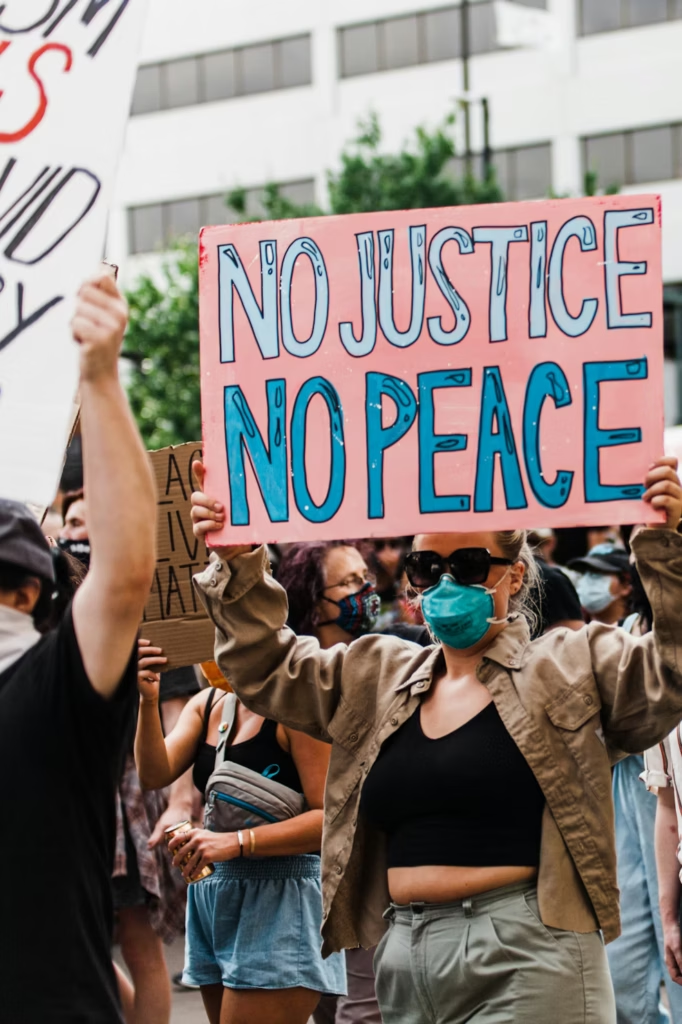
The double-speak feels beyond what Orwell could have imagined: Trump was awarded a peace prize by FIFA – and then, barely a week later, the US Institute of Peace was renamed the Donald Trump Institute of Peace. To that, the ongoing intimidation and abuse of power by ICE go against the very notion of peace. For those who have dedicated their lives to peace-building, these actions lay bare profound injustices.
Because peace is not a brand, an honorific, a hollow symbol nor intimidation – it is sustained, difficult work.
At Equimundo, we’ve spent decades working alongside peace-makers and peace-builders in some of the world’s most complex and fragile contexts. What we’ve learned is simple but challenging: peace is built patiently, locally, and often quietly – by people willing to confront violence at its roots.
Dans Rwanda, we work with the Rwandan Men’s Resource Center to expand national parent training programs – focusing on fathers. These efforts have led to measurable reductions in men’s violence against women and improvements in the health and well-being of children, women, and men themselves. This is peace that begins in the family. Call it peace at home.
Dans le République démocratique du Congo, our long-standing partnership with the Institut Living Peace engages men to break cycles of violence in their communities. Together, we’ve supported men to become allies in preventing and responding to conflict-related sexual violence against women and girls, helping break cycles of harm and rebuild community trust. Call it peace in the community.
Dans Afghanistan, before the Taliban takeover, and before Trump’s illegal renaming of the Institute – we worked with the original U.S. Institute of Peace to train young men as community activists for women’s rights. In a setting where those rights remain fragile and contested, this work was, and still is, essential. Call it peace for women and girls.
These examples are not abstract. They are hard-won lessons in what real peace-building requires. We’ve seen firsthand the power of men engaging as allies to end cycles of violence against women, against children, and against one another. This is not theoretical. It’s possible. We have seen the results.
But peace demands more than slogans. It requires leadership. It demands collaboration between women and men, local communities, and global partners. It requires deep relationships and long-term commitment. Above all, it requires courage.
The tragedy this week at Brown University, where an act of senseless violence shook a community known for its commitment to dialogue and inclusion, is a stark reminder of how fragile peace can be, even in places where it feels secure.
Contrast that with the powerful display of heroism by Ahmed El Ahmed at Bondi Beach, who risked his own safety to intervene and prevent further harm during a violent incident. His actions embody the kind of bravery that true peace-building demands, not from politicians who claim it, but from people who practice it.
We see this quiet courage globally, even in the most volatile of places. In Rio de Janeiro, amid a year marked by police violence, local peacebuilders continue to protect their neighborhoods and advocate for nonviolence, often at great personal risk. Our partner organization Instituto Mapear works to support the fathers in low income settings in Rio who live peace every day. Their work rarely makes headlines, but it matters deeply. It represents real peace-building.
Those who truly stand for peace, who build it day by day, often without recognition, are the individuals who we should uplift, celebrate, and more than anything, support.
They are the people who inspire us as we end the year and look toward the new year.
May true peace, real peace, be our north star for 2026.
Peace is built by those who do the work.

 Français
  English
  Português do Brasil
  Español de México